The Rosetta Stone
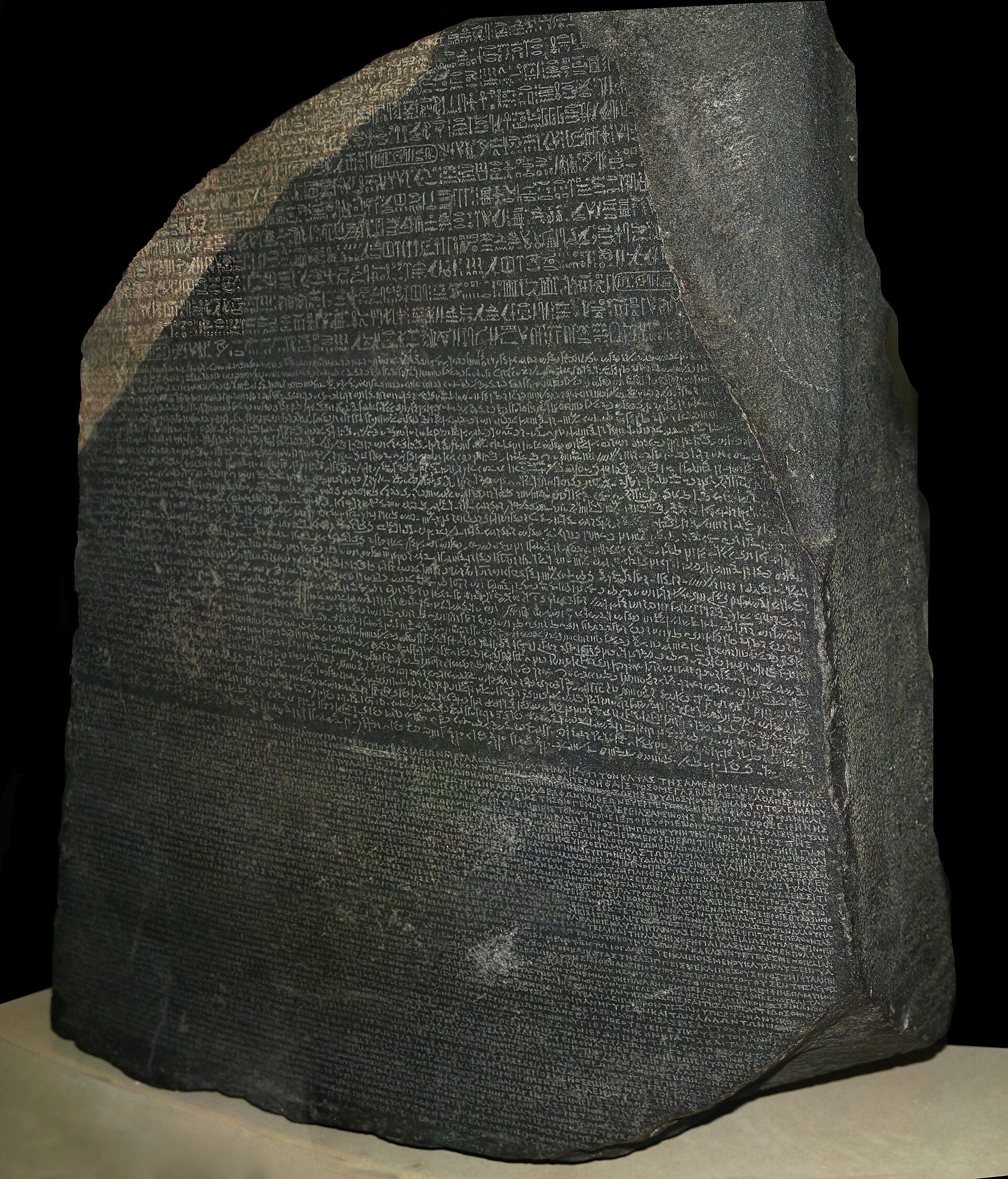
The granodiorite stele whose trilingual decree unlocked Egyptian hieroglyphs — the key that opened the entire world of ancient Near Eastern texts to modern scholarship.
Carved in 196 BC during the reign of Ptolemy V, the Rosetta Stone bears a priestly decree inscribed in three scripts: Egyptian hieroglyphs, Demotic, and Ancient Greek. Discovered by French soldiers near Rashid (Rosetta) in 1799 during Napoleon's Egyptian campaign, it passed to Britain under the Treaty of Alexandria and has been displayed in the British Museum since 1802.
Without the Rosetta Stone, the entire Egyptian witness to Scripture — from the Merneptah Stele's first mention of Israel to the records of Shishak's campaign against Jerusalem — would remain unreadable. Jean-François Champollion's 1822 decipherment, built on this stone, gave scholars the language of every Egyptian inscription that touches the biblical world.